

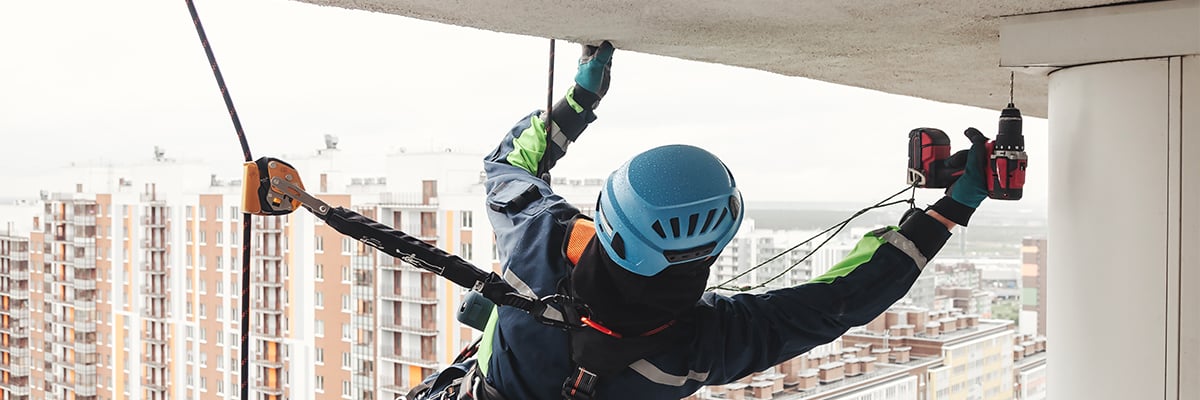
Safety Spotlight: Preventing Dropped-Object Hazards
While preventing falls on the job is mission critical, so is preventing loose objects from falling from height. Tools, materials, and even debris or trash that tumble over an edge can cause everything from minor cuts and puncture wounds to concussions. If a dropped object hits someone in the head, the impact could potentially be fatal, especially if they aren’t wearing a hard hat.
Minimizing the risk of objects falling from elevated work areas isn’t a heavy lift. Just keep these commonsense points in mind.
Tether Tools
Tethering tools is like having an extra set of hands. When tools are tethered, you can also concentrate better on what you’re doing, so you can get the job done on time — and get it done safely.
When tethering tools, always use lanyards designed for the tool’s weight. If you use a lanyard that’s too lightweight, it could snap under force; a lanyard that’s too strong could create a hazardous recoil.
Also make sure that the lanyard isn’t overly long, so it doesn’t snag on anything. Consider using coil or retractable lanyards to avoid this issue.
Tether tools under 5 pounds to yourself or to a fixed, structural anchor point. Tether heavier tools to a fixed anchor point — never tether them to yourself or anyone else.
It’s also important to inspect lanyards for wear and tear each time before using them, as well as the tether point on tools and the anchor point.
Use Barriers
Toeboards help prevent tools and other materials from rolling over or being accidentally kicked off the side of an elevated platform. Per OSHA, toeboards need to be at least 3 ½ inches in height from the floor or working surface and be strong enough to handle at least 50 pounds of force from any direction.
Even with toeboards in place, make sure equipment and materials aren’t stacked higher than the edge of the toeboards, unless there’s screening or something similar in place to prevent objects from falling over the toeboard.
Cut Clutter
Keeping your worksite clutter-free and organized also goes a long way toward preventing objects from falling from above.
If stacking materials, make sure they’re stable and at least 4 feet from edges. Keep any tools and other things you’re not using safely stored and secured.
Don’t hang or drape items over guardrails, and practice good housekeeping — don’t let trash and debris accumulate. Place trash in transport buckets with closure systems and then dispose of the trash regularly.
Additional Practices and Secondary Measures
- Use pouches, tool belts, or tool buckets with hooks or tethers for items that you can’t tether, such as nuts, bolts, and screws.
- Never carry items, including cell phones, in open or unsecured pockets.
- Be careful when passing a tool to someone else. Don’t detach your lanyard until the team member you’re passing it to has attached it to theirs.
It’s also important to have protection in place in case something is inadvertently dropped.
Safety netting, catch platforms, or canopies erected around walkways, platforms, and building perimeters can all help keep workers safer, as long as those things are strong enough to withstand the impact force of whatever has fallen.

Jobsite Safety Starts with the Right Support
Making sure you have the right gear to prevent objects from falling is crucial for reducing risk on the job. Crescent Electric local teams are knowledgeable, experienced, and ready to help you select what you need to keep you and your workforce safe.
Related Posts


