

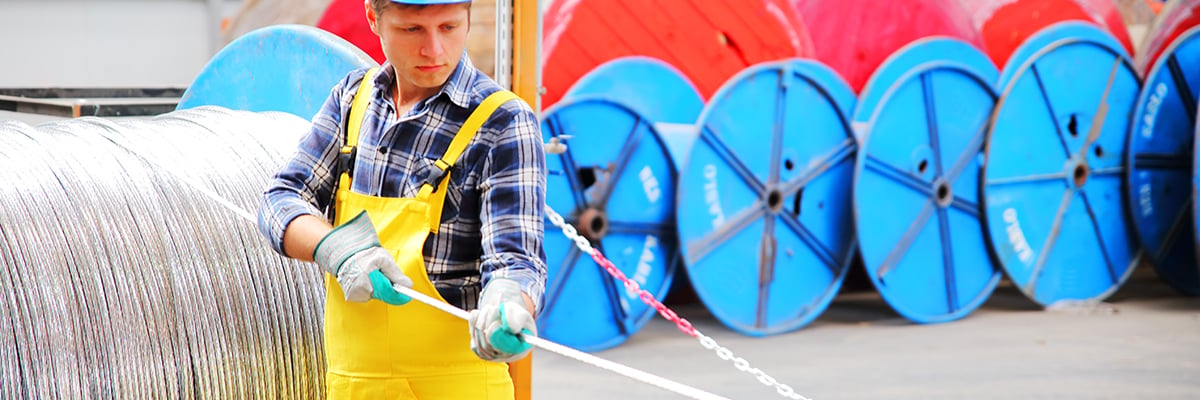
Wire Handling Basics: Staying Safe on the Job
Handling wire is a routine part of electrical work, but it comes with real physical risks that are often underestimated. At Crescent Electric, safety is a shared responsibility across every jobsite, branch, and warehouse. From lifting and staging heavy spools to pulling and securing wire, understanding common wire handling hazards and following proven safety practices helps protect people, equipment, and productivity every day.
Wire Handling Safety Basics
Among the many day-to-day tasks that are performed in the electrical industry, wire handling is arguably one of the more physically challenging tasks. Regardless of the size and weight of a wire spool, inherent hazards exist that should be considered each time wire is being handled.
Potential wire handling hazards include:
- Musculoskeletal injuries: Lifting, moving, or pulling heavy, large-gauge wire spools can lead to back, muscle, or ligament strain.
- Crushing/Impact injuries: Improper handling can cause wire spools to fall or tip over, injuring feet, hands or arms, or other body parts.
- Uncontrolled rolling: Wire spools may become uncontrollable if improperly handled or secured during staging, loading/unloading, or transport, posing a risk of impact injuries or vehicle accident.
- Entanglement/Falls: Wire, especially loose wire which is not properly secured, can lead to tripping hazards or foot or limb entanglement, causing a trip or fall.
- Struck-by/Flying objects: Wire that is under high tension and improperly secured can lead to a whipping or snapping effect that could cause an injury.
- Splinters, Cuts, and Scrapes: Metal or wood splinters, or cuts and scrapes, are common hazards when handling wire, wire spools, or pallets used for wire storage.
- Ergonomic Hazards: Awkward bending or reaching postures when handling wire spools can lead to back and shoulder strains. Minimizing the Hazards of Wire Handling
Tips for Safer Wire Handling
- Use Proper Lifting Equipment: Use a properly inspected forklift, pallet jack, wire reel equipment for moving and lifting spools, or lift gate when the task is too heavy for manual lifting.
- Wear Personal Protective Equipment (PPE): Wear safety shoes, safety glasses, and the appropriate type of gloves at all times.
- Store Safely: Properly stored wire spools reduce the risk of an accident or injury when wire is handled with either equipment or manually.
- Clear Paths: Verify your path is clear of debris and the surface is safe for travel when handling wire spools indoors or outdoors.
- Avoid Overloading: Never overload wire spool lifting devices (PITs, slings, pallet jacks, lift gates) and always complete an inspection prior to use.
- Lift with a Team: For awkward or heavy wire spools that do not require lifting equipment, perform the lift with two people and always use good lifting technique.
Jobsite Safety Starts with the Right Support
Safe wire handling starts with the right guidance and the right equipment. Crescent Electric’s local teams are knowledgeable, experienced, and ready to help you identify products, tools, and best practices that support safer material handling on the jobsite and in the warehouse.
From wire management solutions and handling equipment to everyday electrical needs and PPE, our local experts work directly with contractors, electricians, and facility teams to provide practical, job-ready support.
Visit your local Crescent Electric location or fill out the form below to connect with our team.