

Safety Spotlight: Arc-Flash Rated PPE
It goes without saying that an arc flash is incredibly dangerous. The hot gas produced by the explosion can ignite clothing and produce particles of molten metal, severely or even fatally burning the worker on the receiving end of the flash. The explosion also creates deafening noise and supersonic concussive forces.
And because your safety (and regulatory compliance) is paramount on the jobsite, arc-flash rated personal protective equipment (PPE) is vital. It’s your last line of defense should an arc-flash occur.
Choosing the right protection
Selecting the best PPE for the job starts with knowing the incident energy level of the equipment you’ll be working on. Incident energy is the amount of thermal energy that could impact a person standing a certain distance from an arc-flash event. It’s measured in cal/cm2.
Look at the equipment’s arc-flash label for the incident energy level and the required PPE. If the equipment doesn’t have an arc-flash label, refer to NFPA 70E task-based tables, which group tasks by equipment type, list common electrical activities, their hazards, and required PPE categories.
Make sure your PPE meets or exceeds the incident energy level.
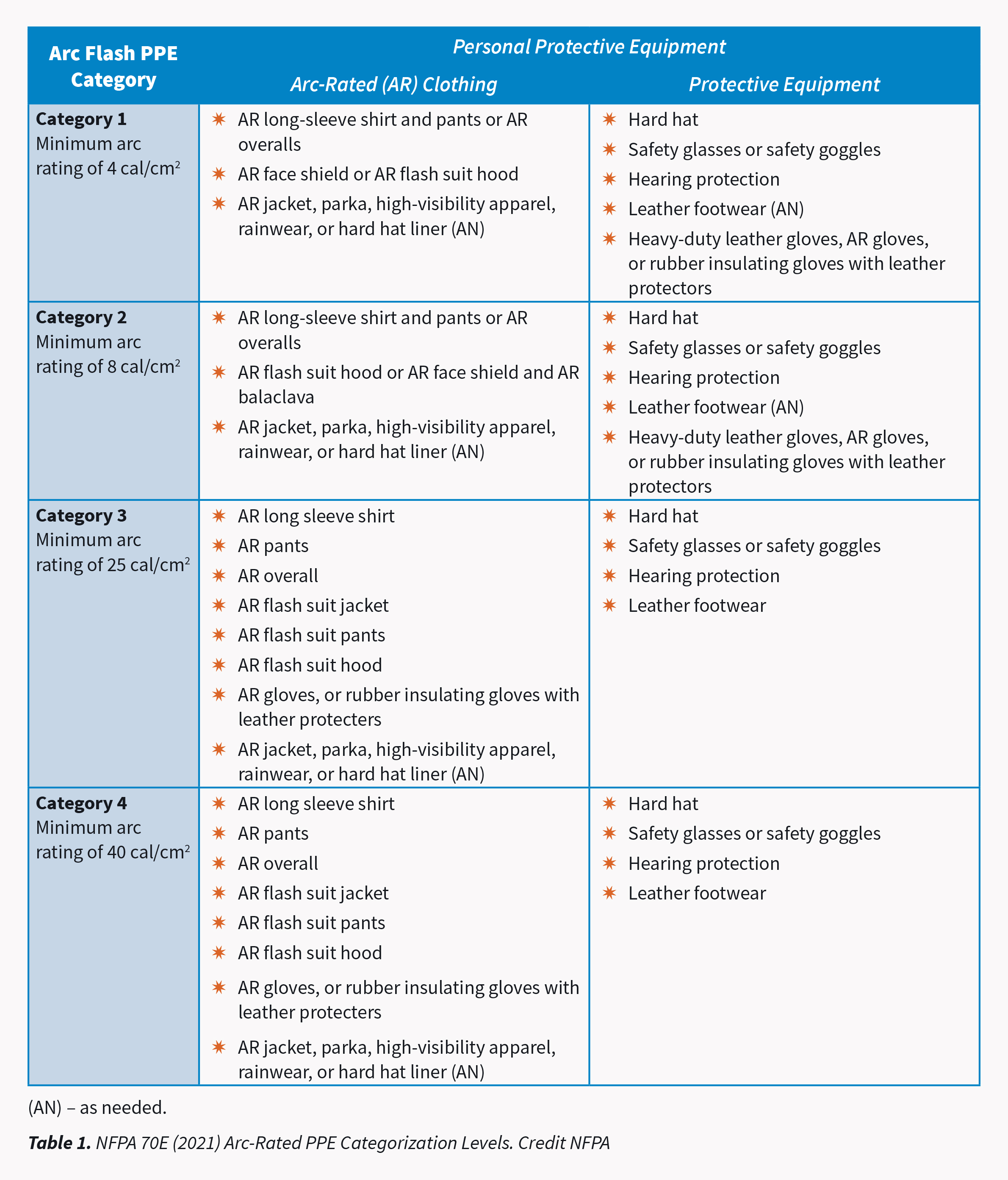
NFPA 70E lists four categories for arc-rated PPE, with category 1 the lowest level. The degree of protection provided and number of layers required increases according to the category. The higher the arc rating, the more protective the material.
Keep in mind that flame-resistant clothing is not the same as arc-flash rated clothing. While arc-flash rated clothing is designed to withstand high temperatures and prevent burns, not all flame-resistant clothing provides arc-flash protection.
The following chart, from the NFPA, details the right protection for a job, based on incident energy.
Don’t skip the basics
What you wear underneath arc-rated PPE matters, too.
Per OSHA, “Wearing meltable or flammable undergarments is dangerous and prohibited under 29 CFR 1910.269. Even when the outer layer is arc rated, some undergarments can melt or ignite easily when an electric arc occurs.”
OSHA guidelines also note that undergarments “can melt or catch fire if the outer arc-flash gear is worn incorrectly, such as with an untucked shirt, rolled-up sleeves, or unbuttoned clothing.”
One last safety tip: inspect PPE to make sure it isn’t worn or damaged. Look for rips, tears, or other signs of wear, including cracks in rubber-insulated gloves and scratches, UV damage, or expired ratings in helmets, face shields, and arc-rated hoods.
Jobsite Safety Starts with the Right Support
Choosing the right PPE for the job is critical for protecting yourself against an arc flash incident. Crescent Electric local teams are knowledgeable, experienced, and ready to help you select what you need to keep you and your workforce safe.
Visit your local Crescent Electric location or fill out the form below to connect with our team.